n8n Pipeline for AI News to LinkedIn, X, and Threads Posts
Case summary
Quick scan before the full breakdown.
Goal
Automate AI news discovery, scoring, and draft creation for LinkedIn, X, and Threads
Stack
n8n, OpenAI, Claude, Google Sheets, Make, Buffer, Telegram
Result
About 2 of ~20 weekly scored drafts were good enough to use with a light pass; the rest got cut at scoring or still needed manual rework
Time saved
Confirmed about 7 hours per week saved on research, summarizing, and first-draft writing
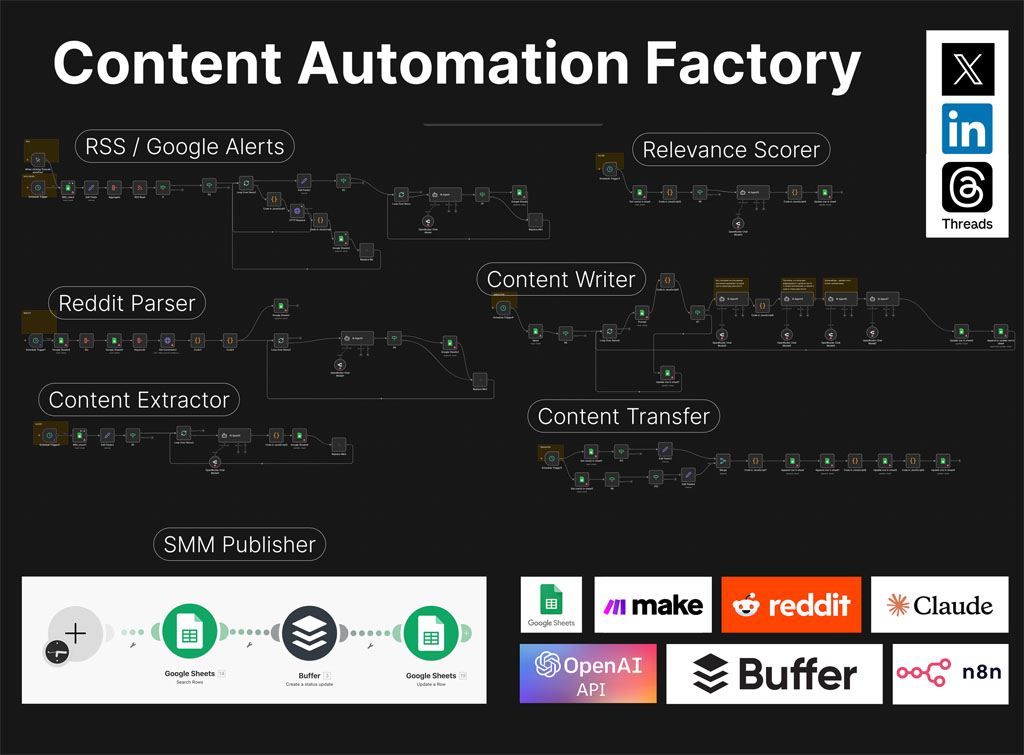
Built a system in n8n that finds AI news every morning, filters it down to what’s actually relevant, scores it, and turns the best of it into draft posts for LinkedIn, X, and Threads — reviewed once a week instead of written from scratch.
How it works
Google Alerts and RSS feeds get checked every morning; a separate workflow parses selected Reddit threads for anything relevant too. New items go through keyword matching first, then a cheap OpenAI model checks whether they’re actually on-topic — that catches most of the noise before anything more expensive runs.
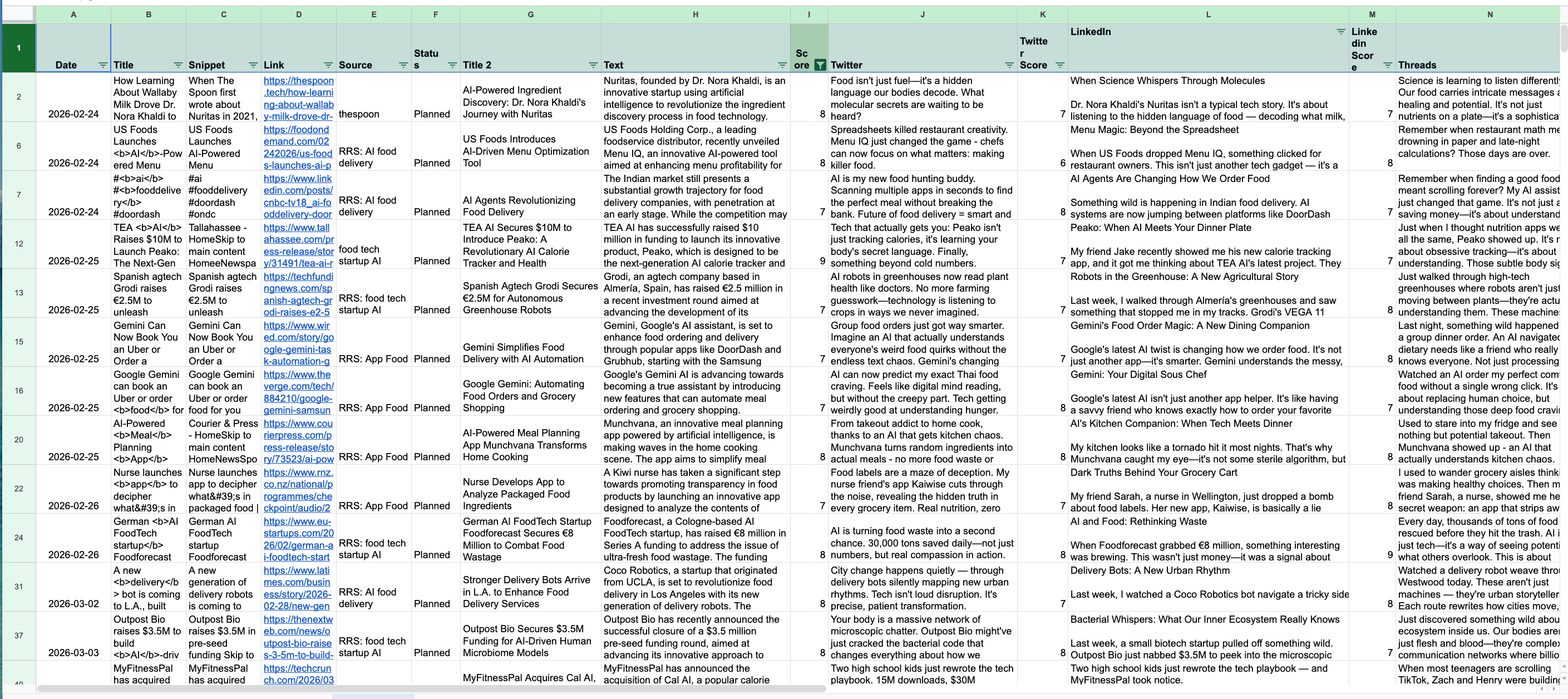
Everything that passes gets scraped for the full article text, reduced to a structured summary of the actual facts, and scored 1–10 for how well it fits the brand’s content goals. Only the higher-scoring items move on to drafting.
The hard part: making the drafts not sound like AI
Getting a decent first draft was never the problem. Making it not read as AI-written was.
First attempt: give the model a persistent “author history” — invented personal details it could reuse across posts. An aunt in Italy, say. Once written, the detail got saved so a later post could reference it again, capped at 10 entries so it wouldn’t spiral. It worked, a little. But once 20 posts existed, they started sounding the same again — just recycling the same handful of fake anecdotes instead of the same generic phrases.
Second attempt: random writing frameworks, dropped into the system prompt to force a different structure each time. Random assignment meant a lot of topics got forced into a shape that didn’t fit them. Letting the model choose its own framework didn’t help either — it kept picking the same one every time.
The humanizing process also included a short list of banned AI-tell phrases — expressions that immediately read as AI. The prompt itself started as author’s-voice-and-principles, then got more complex with the history layer. In the end, we dropped almost all of the style and history principles. Lesson: shorter prompt, fewer rules, better result — both in text quality and in how reliably it ran.
No version of this ever produced a post that could go out as-is. Every one still needed a small manual pass — usually one deliberately uneven sentence added at the start or the end.
Scoring
The scoring model held up well. Out of roughly 20 drafts a week, about 2 were genuinely worth publishing — and what made those two work was the topic and a presentation that hadn’t been over-engineered by the framework/history layers, not anything the scoring step itself did.
What was actually worth automating
News discovery and scoring was the strongest part of the system — it surfaced real topics reliably and ranked them well. Drafting was the weakest part and stayed weakest. No amount of prompt engineering fully closed the gap between “AI wrote this” and “a person wrote this.”
Result
The marketer went from writing every post from scratch to reviewing about 20 scored drafts a week, picking the 1–2 worth using, making a light pass, and publishing. Confirmed time saved: about 7 hours a week.
Stack
n8n, Google Alerts and RSS, Reddit parsing, OpenAI (filtering, scoring, first drafts), Claude (humanizing pass), Google Sheets (control layer), Make and Buffer (publishing), Telegram (error alerts).
More cases
Three nearby case studies worth reading next.
Apr 10, 2026
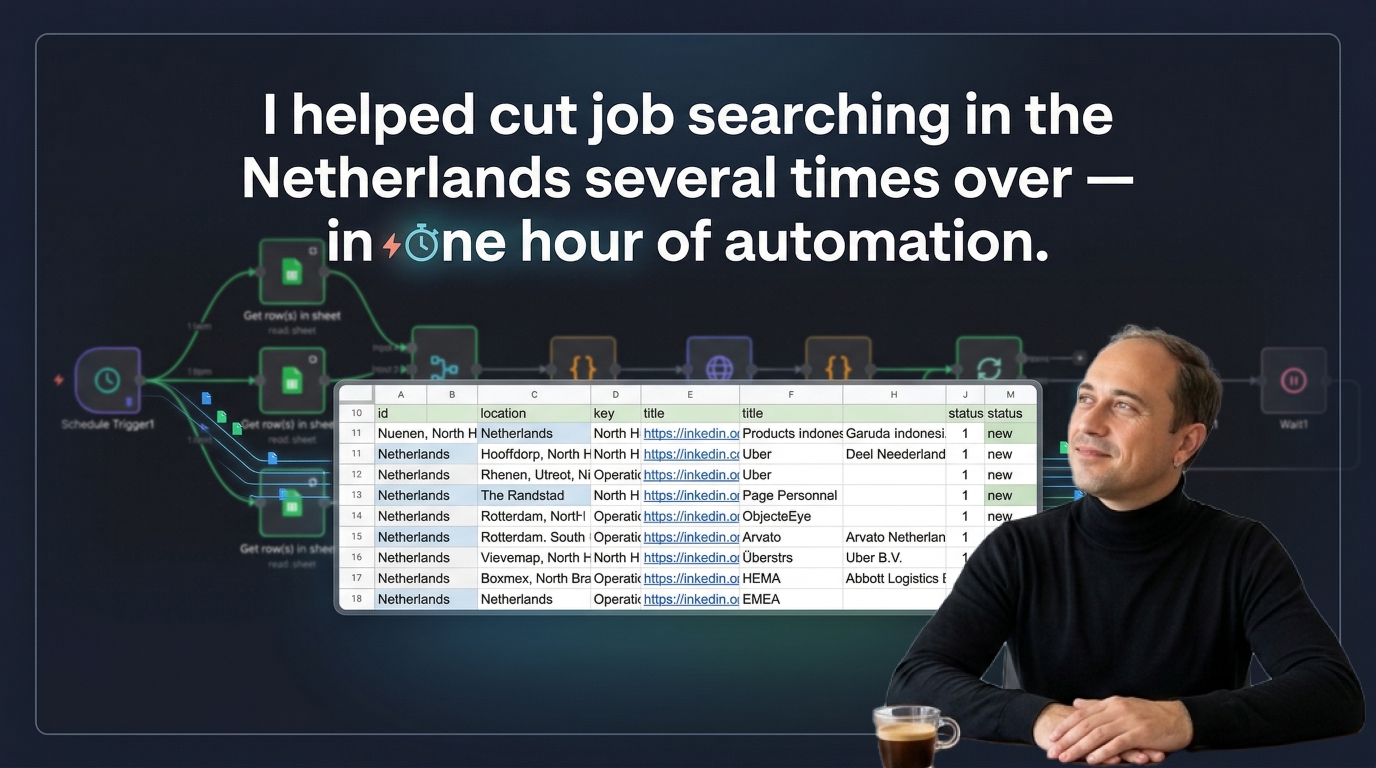
Telegram Job Search Bot for Sponsor-Friendly Roles in NL
An n8n workflow that searches fresh LinkedIn vacancies, checks companies against the IND sponsor register, and writes application-ready leads into Sheets.
Apr 3, 2026
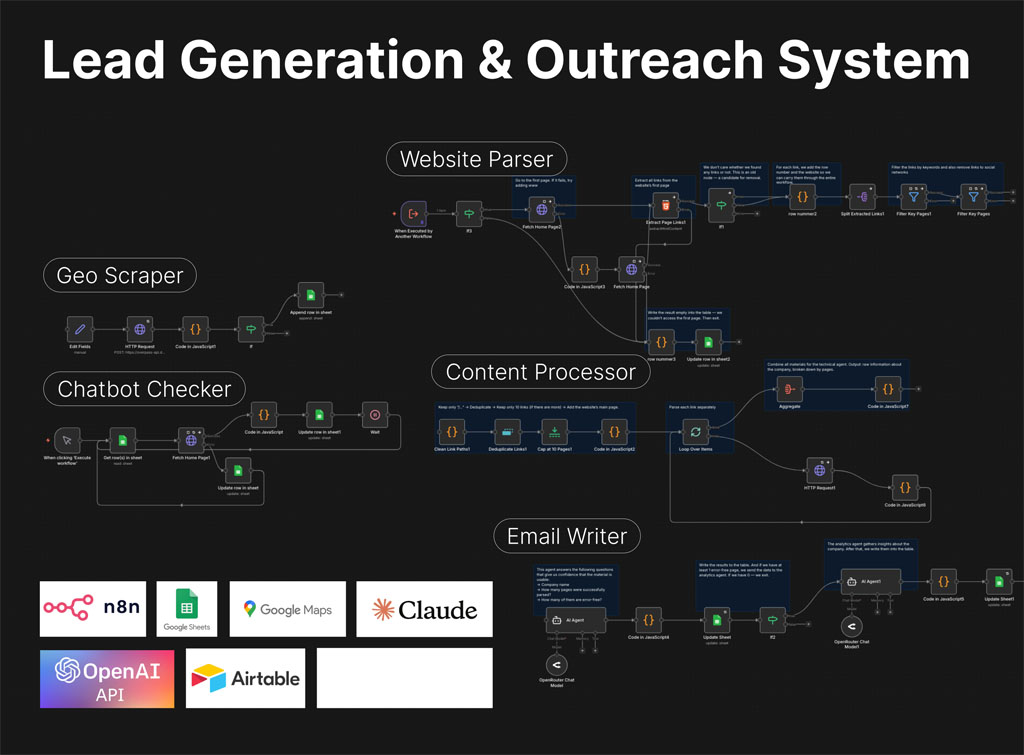
AI Lead Generation and Outreach Automation System
A Slack-controlled prospecting system that collects leads, analyzes websites, qualifies opportunities, and drafts personalized outreach emails.
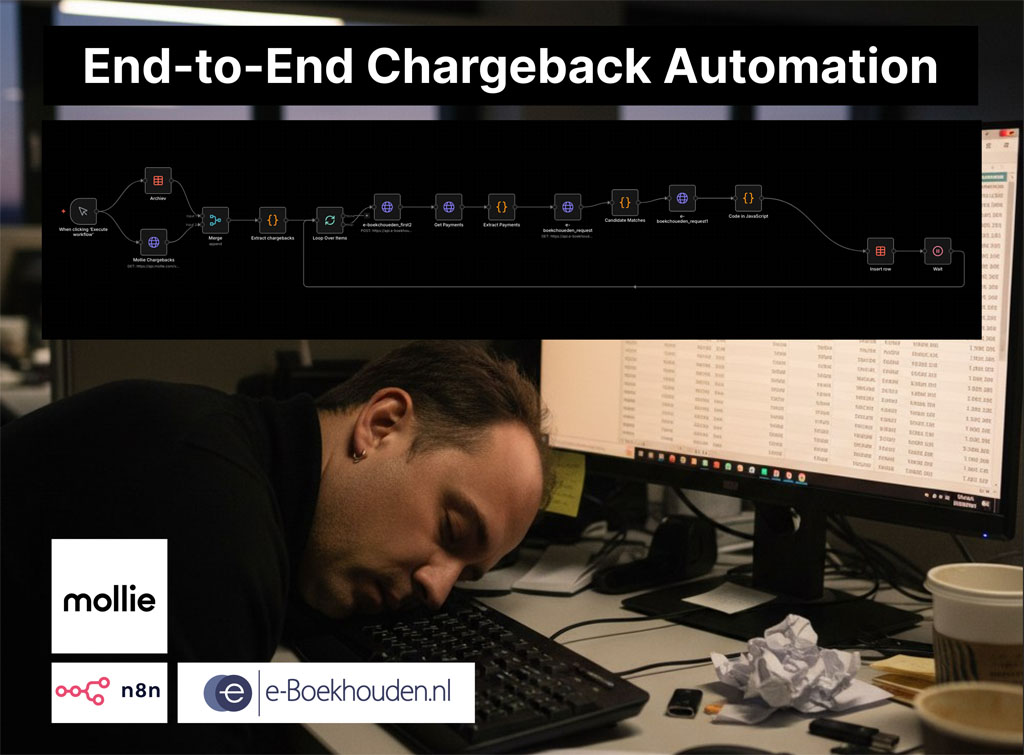
Apr 4, 2026
End-to-End Chargeback Automation for Mollie and e-Boekhouden
A two-workflow n8n system that matches Mollie chargebacks to the correct e-Boekhouden mutations and creates the accounting entries automatically.