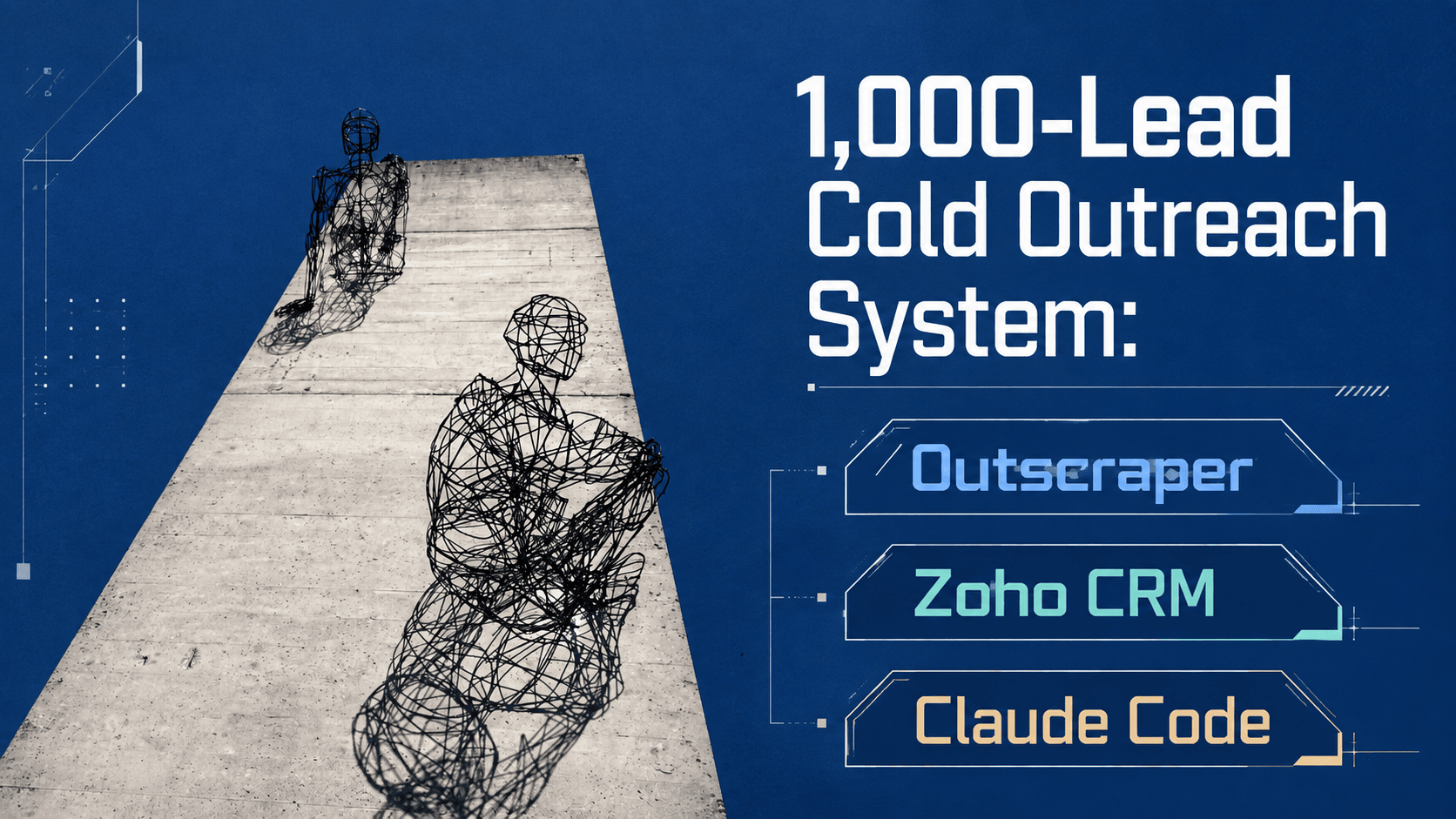
1,000-Lead Cold Outreach System: Outscraper, Zoho CRM, Claude Code
Case summary
Quick scan before the full breakdown.
Goal
Build a repeatable B2B outreach machine that finds the right businesses and moves every contact through a defined sequence
Stack
Outscraper, Python, Cloudflare-bypass container, Claude Code, Zoho CRM
Result
~1,000 businesses sourced and classified, 140 emails sent in two weeks, 2 meetings booked from a cold list
My client is a sculptor working from a studio in Tivat, Montenegro. His work sells through relationships — an architect specifies it, a designer places it, a hotel commissions it. He had no systematic way to reach those people. Outreach happened when he remembered to do it.
The goal wasn’t “send more emails.” It was to build a repeatable machine that finds the right businesses, understands what each one actually does, and moves every contact through a defined sequence without anything falling through the cracks.
What I built
1. Sourcing
Outscraper pulled business records from Google Maps across four segments: architecture firms, interior design showrooms, restaurants, and hotels. About 1,000 companies with names, addresses, phones, and websites.
2. Enrichment
Google Maps data tells you a company exists, not whether it’s worth writing to. I wrote a Python scraper that visited every website. Many sat behind Cloudflare, so requests routed through a dedicated solver container that handled the challenge and returned clean HTML. The same pass harvested secondary channels the Maps listing never showed: Facebook, WhatsApp, Telegram.
3. Classification
Claude Code read each scraped site and classified the business by what it genuinely does, not by its Maps category. A “design studio” that only does kitchen renovations is a different prospect than one furnishing boutique hotels. Bad-fit companies were filtered out before they ever reached the CRM.
4. CRM and sequencing
Records pushed into Zoho CRM via API, each one arriving with a personalised first email already drafted by Claude Code and a send task auto-created. Zoho workflows then chained the sequence: close the “send email” task, a reminder-email task appears days later, close that, a phone-call task appears. The follow-up structure runs itself.
5. Sending
Zoho lets you connect your own mailbox even on the free plan, so everything sends from the client’s real address. Delivery stayed human and deliberate: five emails a day, reviewed before sending. Secondary contacts got messages through Facebook, WhatsApp, and Telegram.
Results
- ~1,000 businesses sourced, scraped, and classified
- 140 emails sent over two weeks
- 2 meetings booked from a cold list, in a market with no prior relationships
- a CRM that now holds every contact, every touch, and every next action
The volume ceiling is deliberate. Sending is still human-in-the-loop while we learn which segments and which messages actually land — automating a message nobody answers just produces failure faster. The infrastructure underneath is fully built and ready to scale the moment the copy proves itself.
Stack
Outscraper, Python, a Cloudflare-bypass container, Claude Code, Zoho CRM (API and workflow automations), Facebook/WhatsApp/Telegram outreach.
More cases
Three nearby case studies worth reading next.
Aug 10, 2026
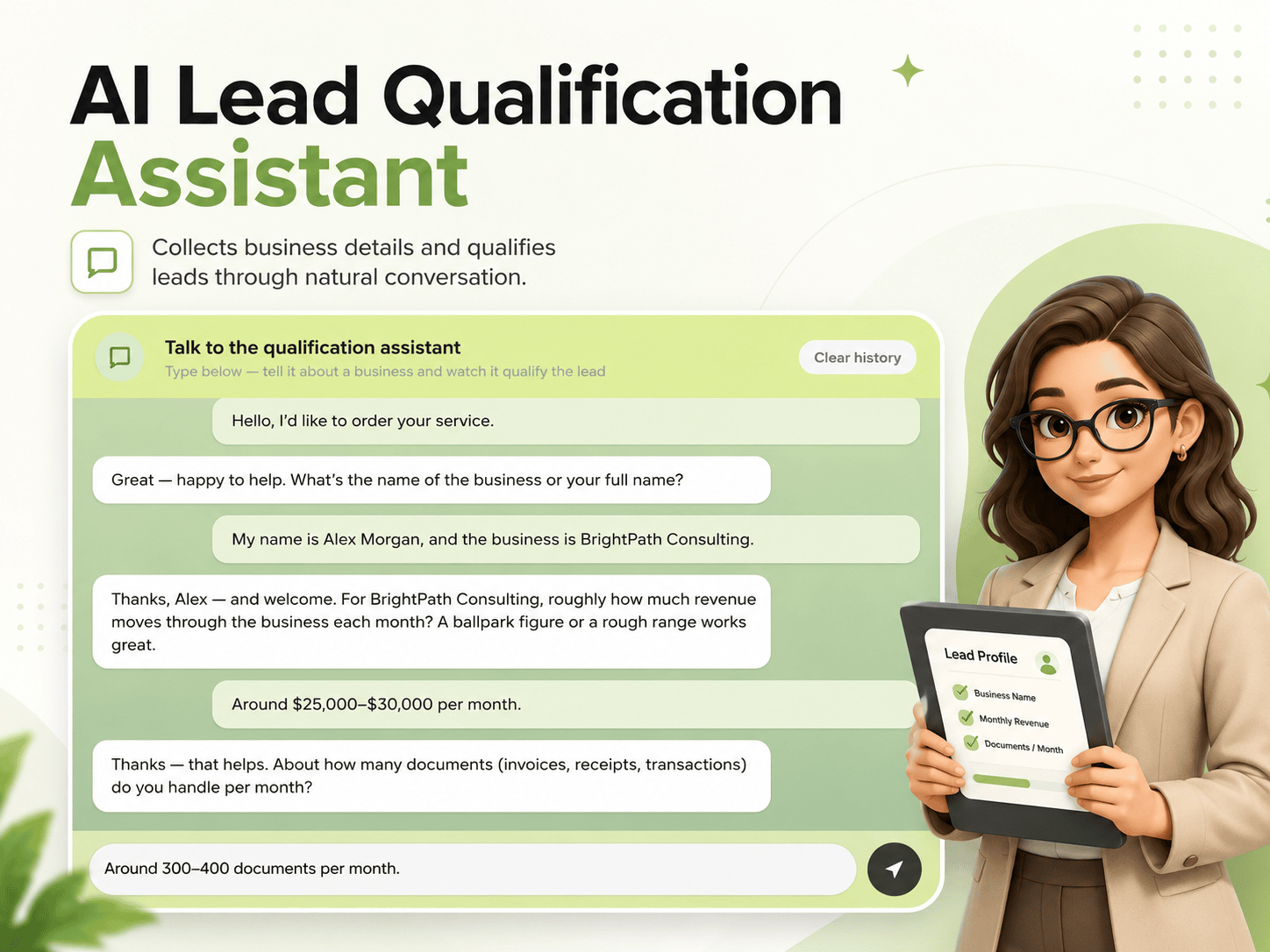
AI Lead Qualification Assistant with Live Scoring (n8n)
A conversational n8n assistant that qualifies leads for a bookkeeping firm, scores them against admin-editable thresholds, and starts fresh for every new conversation.
Aug 10, 2026
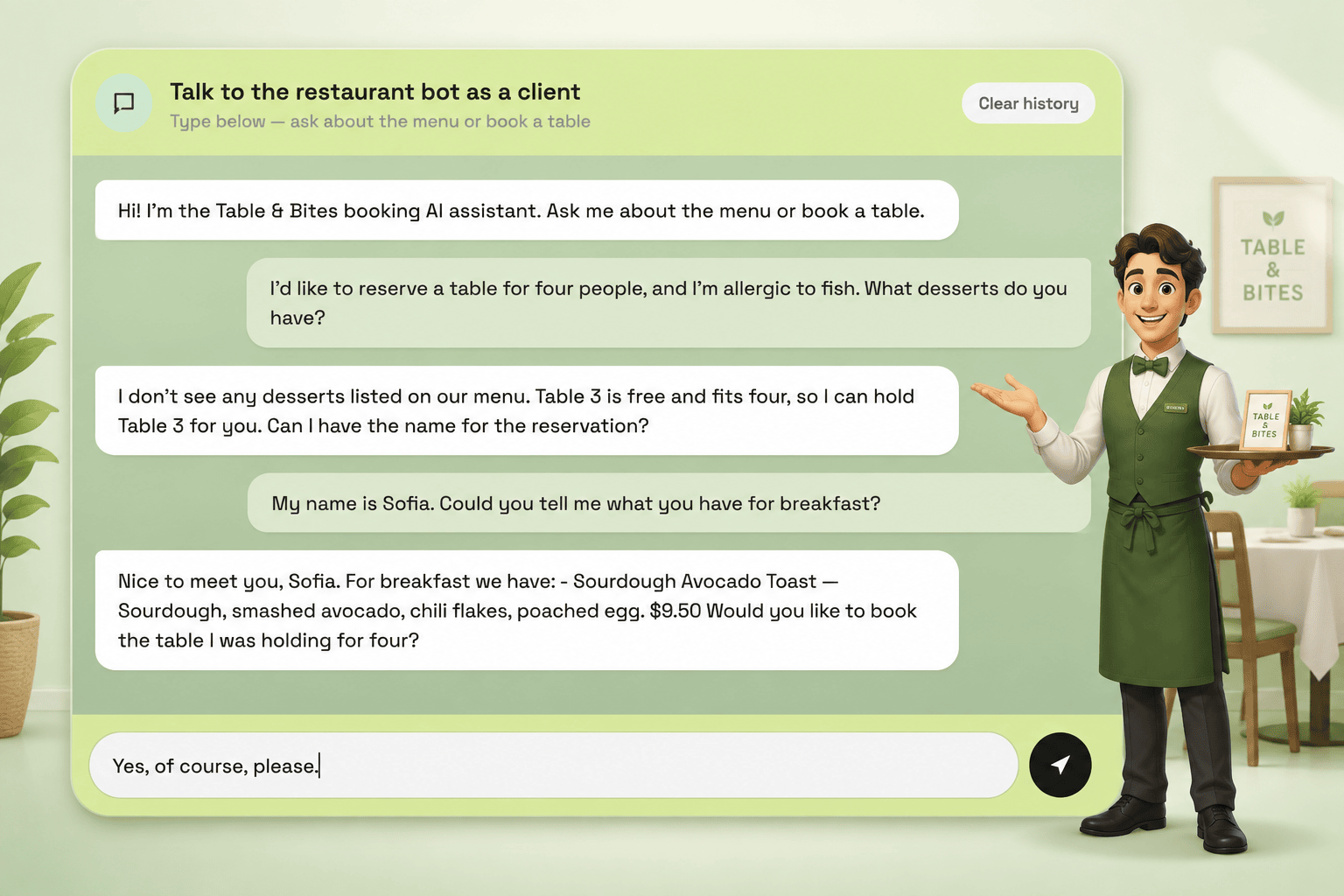
AI Booking Assistant for Restaurants (n8n + GPT)
A live restaurant booking bot that reserves tables, answers menu questions, and tracks several requests at once through an internal ticket system.
Aug 22, 2026
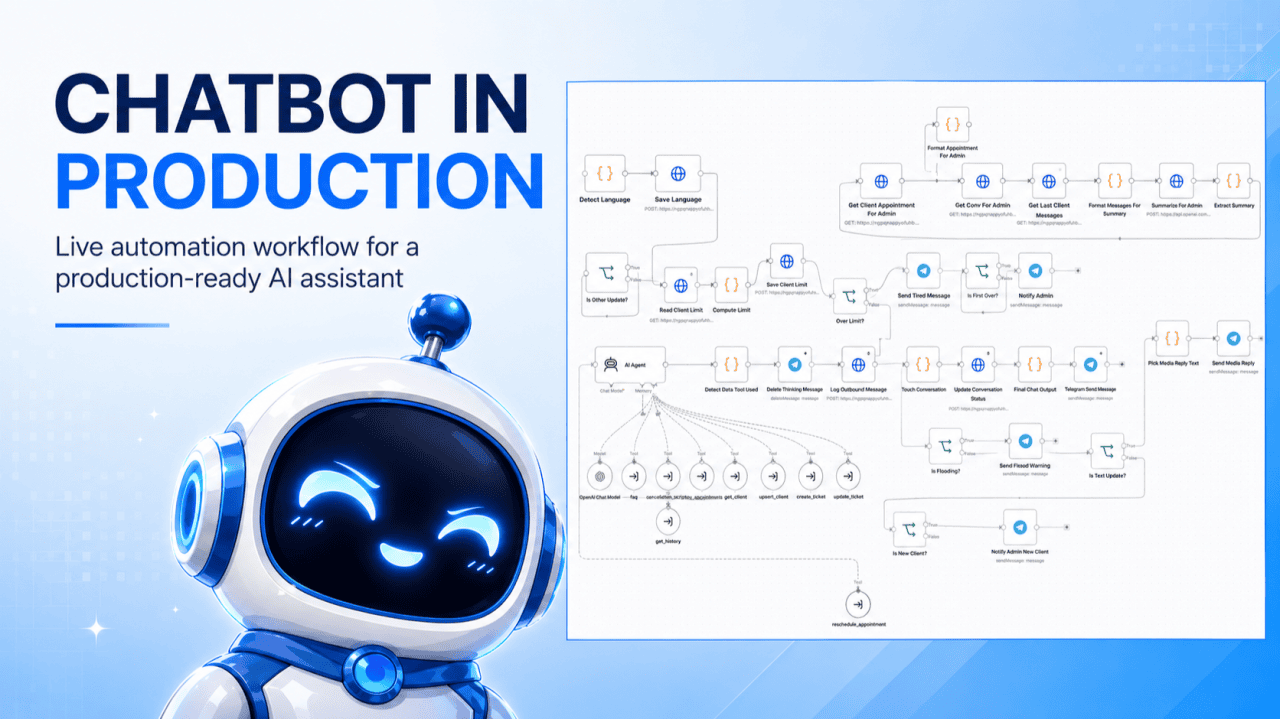
How a Chatbot That Actually Runs in Production Is Built
What it actually costs to run an AI chatbot day to day, why the agent model wasn't worth it, and how ticket-based state beats keeping everything in the prompt.