
Your bank choice is also a bookkeeping decision
A new ZZP’er asked a simple question: should I use Moneybird’s integrated bank account or open a regular account at ING or Rabobank and connect it?
The replies covered deposit guarantees, product maturity, brand reputation. All relevant.
What didn’t come up directly: the automation implications of each choice.
With an integrated account, transactions appear in the bookkeeping in real time. There’s no sync delay, no connection middleware, no monthly MT940 import. Payments, receipts, iDEAL transactions — they’re in the system immediately.
With an external account connected via Ponto or a direct bank feed, you get the same result — mostly. But you’re dependent on the connection holding, the sync running on schedule, and the bank continuing to support PSD2 access. When the sync breaks (and eventually it does), you’re reconciling manually until it’s fixed.
The integrated path is simpler. It also means your banking is tied to your bookkeeping software vendor. If you ever want to switch bookkeeping tools, you need to move your bank account too. That’s a real constraint.
There’s no universally correct answer here. For a simple ZZP business with standard invoicing, the integrated account removes a lot of friction. For something more complex — multiple payment methods, Mollie for e-commerce, cross-border transactions — an external bank with clean API access might give you more flexibility.
The point is that this isn’t just a banking question.
It’s a decision about how your financial data flows.
Worth thinking about that layer before you sign up for anything.
Read next
Three nearby posts worth opening next.

May 29, 2026
Automated bookkeeping has a hidden subscription
Moneybird without a bank feed is like bookkeeping software without the bookkeeping. The connection costs extra, and for small businesses that math matters.

May 14, 2026
The accounting mess starts at the payment instrument
Credit card transactions don't auto-import into Moneybird — not because nobody built it, but because the card provider controls the data.
Jun 1, 2026
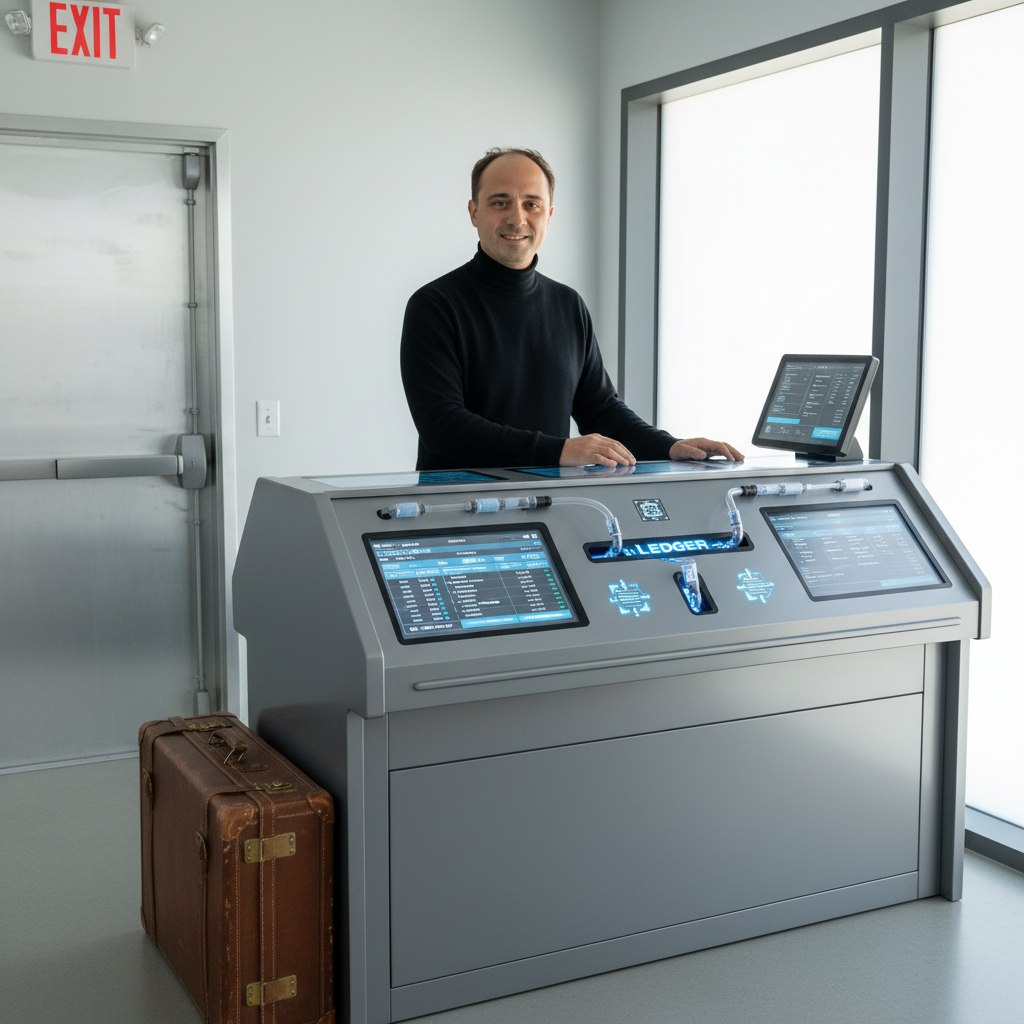
When your bank and your bookkeeping are the same system
All-in-one bank plus bookkeeping removes the sync problem. It also changes what automation looks like — and what tradeoffs you're making without realizing it.