
The assembly line nobody planned
An accountant posted something that got 138 upvotes. Not a tool recommendation. Not a case study. Just a question that apparently landed for a lot of people:
“Sometimes, I wonder why I spent years studying only to find myself doing things that feel like a modern assembly line.”
He’d been automating his way out of it. Started with Excel macros at PwC — amazed that you could record a sequence of steps. Hit the limits fast: one mistake breaks everything, can’t fetch data from other files, can’t fix it without knowing Visual Basic.
Then Python. Then ChatGPT, which he describes as having a coding mentor available at any hour who speaks plain language. FIFO calculations on thousands of rows. Reconciliations that used to take days running in seconds. Not impressive to show, but impossible to go back from once you’ve done it.
What I find interesting about his story isn’t the tools. It’s the order.
He didn’t start with “I want to learn Python.” He started with “this task is mind-numbing and shouldn’t be.” The tool came from the frustration, not the other way around.
That sequence matters. People who start with the tool often end up building automations nobody uses. People who start with a specific task that bothers them tend to build things that actually stick.
There’s also something honest about the 138 upvotes. A lot of accountants recognise the assembly line feeling and don’t often say it out loud. The profession trains you to be precise and thorough — which is right. But it doesn’t always separate the precision work from the repetitive logistics around it.
Those are different problems.
One requires expertise. The other just requires someone to notice it.
Read next
Three nearby posts worth opening next.

May 21, 2026
300 invoices a month. That's not an AI problem.
At 5-10 minutes per invoice, 300 invoices a month is 25-50 hours of manual entry. The part most people skip is building the GL mapping table.

May 22, 2026
The best AI for accounting isn't one tool
After testing AI tools for invoice processing, categorization, and anomaly detection, the conclusion is the same: it's the combination, not the model.
May 10, 2026
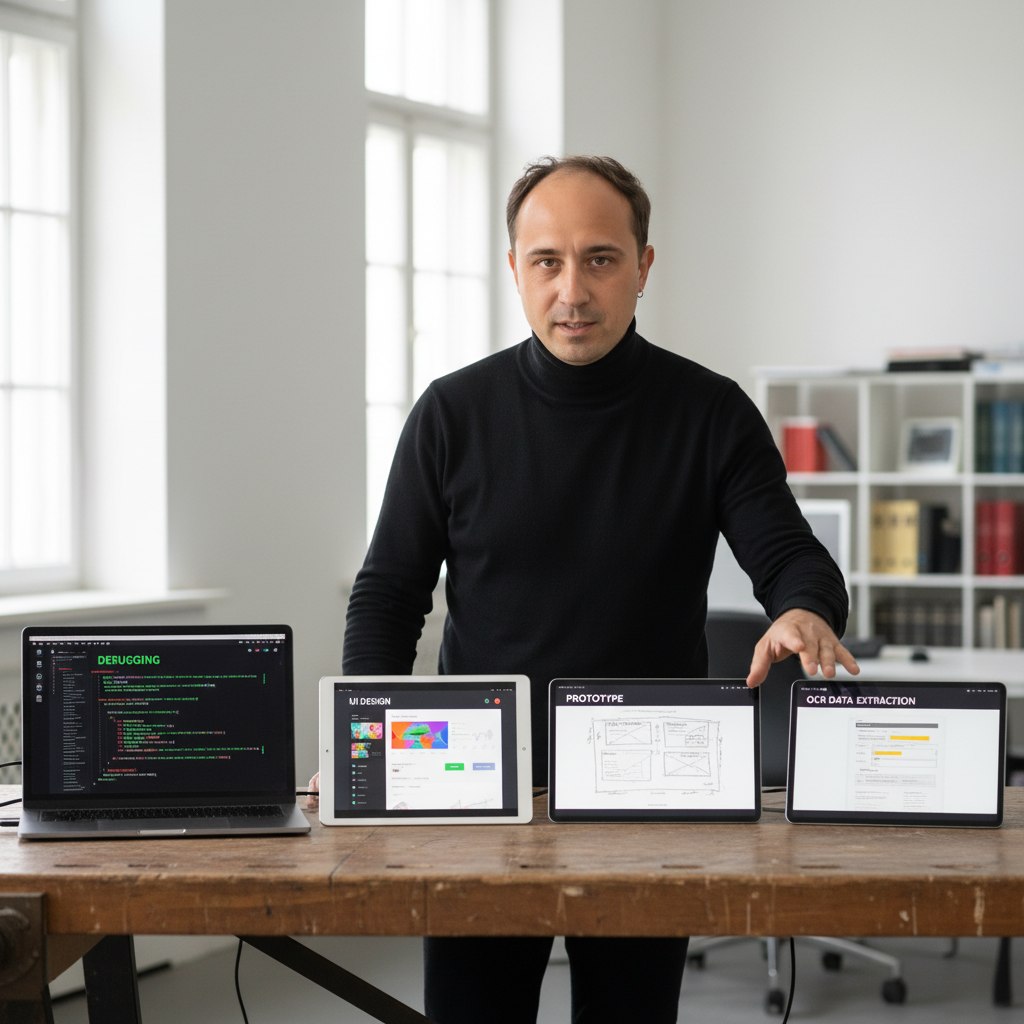
One engineer, four AI models, one finance SaaS
He used Claude for debugging, Gemini for UI, free models for prototyping, and paid OCR when accuracy actually mattered. Each model for the job it's good at.